
One of the most common questions we hear from guests booking their dream villa in Los Cabos or La Paz is simple: “Do I really need to exchange my dollars for pesos?”
It is a fair question. Given how close we are to the United States and how long Baja California Sur has been a favorite for North American travelers, you will find that U.S. Dollars (USD) are accepted almost everywhere. From the high end restaurants in the Cabo San Lucas Marina to the boutique shops in Todos Santos, greenbacks are rarely turned away.
However, just because you can use dollars does not always mean you should. If you want to travel like a local and keep your vacation budget in check, there are a few things you should know about handling money in the Baja peninsula.
The Reality of the Exchange Rate
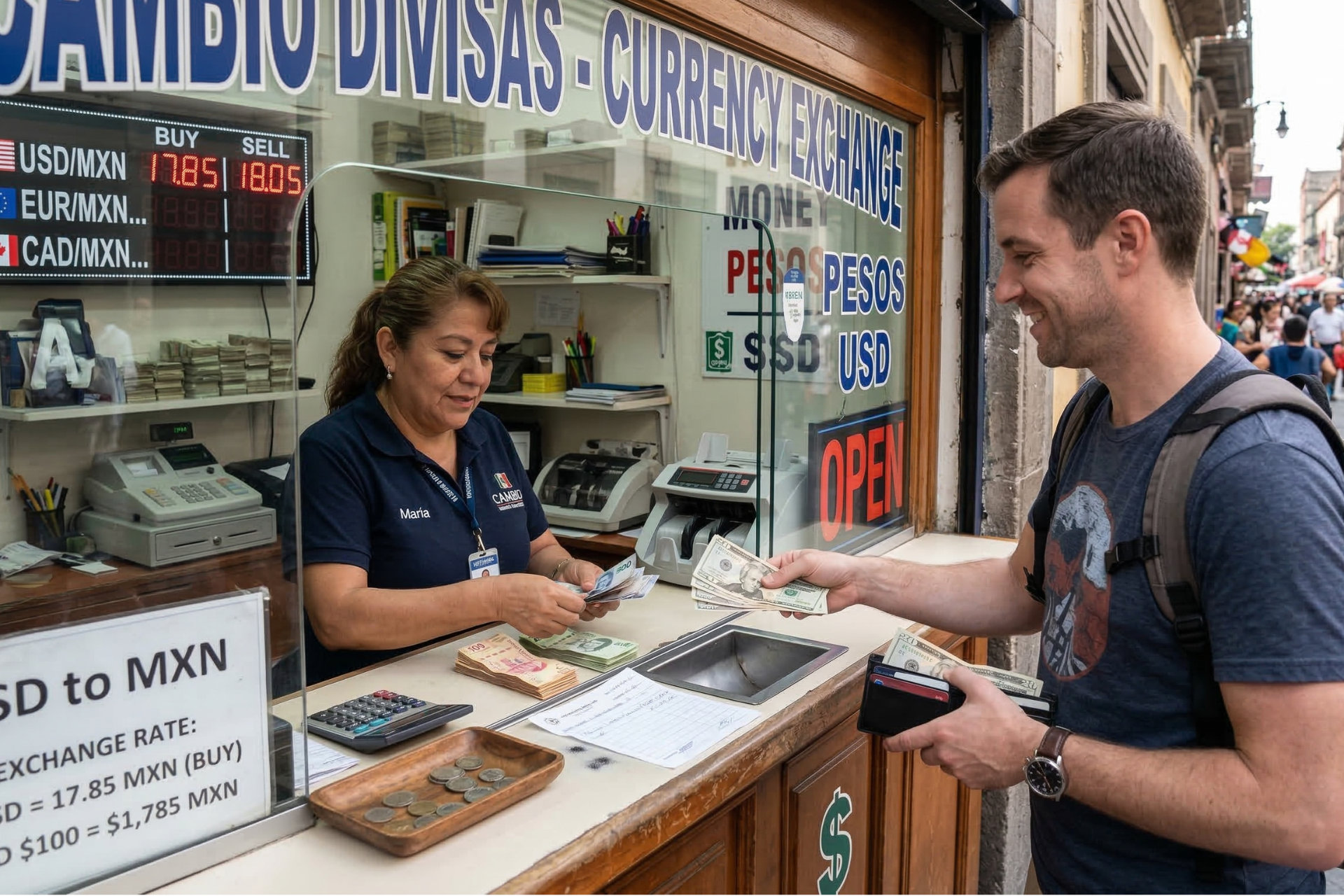
When you use USD in a local shop or restaurant, the business sets its own exchange rate. While the official bank rate might be closer to 18 or 19 pesos to the dollar, a local vendor might give you a flat rate of 15 or 16.
Over the course of a week-long stay, those small differences add up. By paying in Mexican Pesos (MXN), you are essentially giving yourself a 10% to 15% discount on everything from fish tacos to handcrafted souvenirs. Most businesses will display prices in pesos first, and if you pay in dollars, you will almost certainly receive your change in pesos anyway.
Cash, Cards, and the “Embrace It” Tax
While credit cards are widely accepted at major resorts and established restaurants, Baja California Sur still has a vibrant “efectivo” (cash) culture. If you are heading out for a day of whale watching in Magdalena Bay or exploring the hidden beaches near La Paz, having pesos on hand is a must.
Additionally, as of 2026, visitors to the state are required to pay the “Embrace It” tourist tax, which currently sits at 488 pesos (approximately $27 USD). While you can pay this online via credit card before you arrive, having local currency simplifies many of the smaller, unexpected fees you might encounter during your travels.
Pro Tips for Managing Your Money
-
Use Bank ATMs: The most cost-effective way to get pesos is by using an ATM at a reputable bank like BBVA, Banamex, or Santander. Avoid the standalone “no-name” ATMs on the street, as they often have higher fees and lower security.
-
The “Decline” Trick: When an ATM asks if you want to accept their conversion rate, always hit “Decline.” Your home bank will almost always give you a better rate than the Mexican ATM provider.
-
Small Bills are Gold: Trying to break a 500-peso note at a small taco stand is a challenge. Try to keep a healthy supply of 20, 50, and 100-peso bills for tipping and small purchases.
-
Tipping Etiquette: While locals appreciate tips in any currency, providing tips in pesos saves workers a trip to the exchange house and ensures they get the full value of your generosity.
When Should You Use Dollars?
There is one notable exception: tipping. Most service staff in the Los Cabos tourism industry are happy to receive U.S. Dollars as tips. If you find yourself at the end of your trip with a handful of five-dollar bills, feel free to use them to thank your concierge, housekeeping staff, or tour guides.
Ultimately, the goal of your vacation is to relax and enjoy the stunning views of the Sea of Cortez. By carrying a mix of credit cards for large purchases and pesos for daily adventures, you will navigate Baja California Sur with confidence and ease.
Ready to start planning your escape? Whether you are looking for a beachfront villa in San Jose del Cabo or a luxury retreat in La Paz, our team at Baja Sur Vacation Rentals is here to help with everything from booking to concierge services.